Name It. Claim It. Create It.
From Music Business to Video Production: A Creative’s Journey Through Industry Evolution Ft. Robert Teegarden


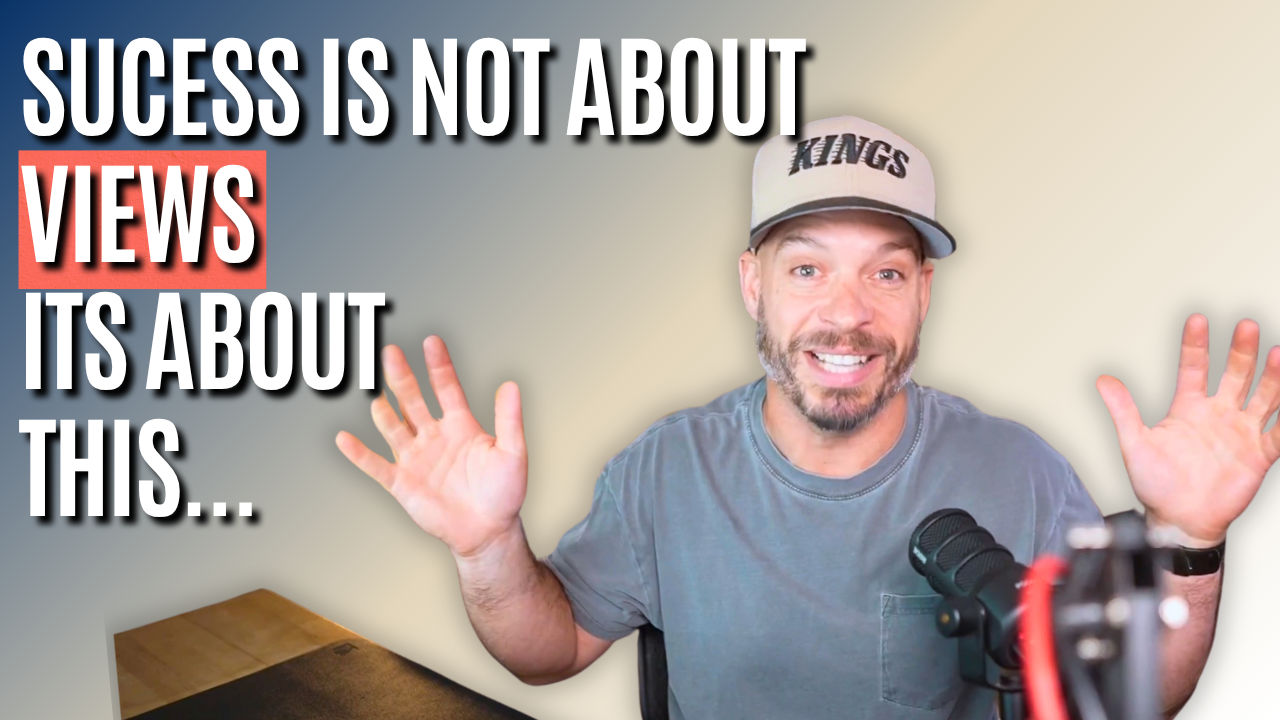
In this episode, Eric sits down with Robert Teegarden, a creative professional whose journey from music business to video production offers valuable insights for modern creators navigating today’s digital landscape.
The Power of Full-Circle Moments
Eric kicks off by diving into Robert Teegarden’s origin story, discovering how the universe brings things full circle in unexpected ways.
Robert shares how it started with a signed press photo from Dirk Lance, Incubus’s original bassist, handed to him by a friend in his high school foyer.
That moment set his entire career trajectory.
Robert grew up in the 818 (San Fernando Valley), surrounded by music. His father almost toured with Oingo Boingo, his mother’s family was filled with musicians, and his uncle was the “Mr. Holland” figure at his middle school for 40+ years.
The Universal Music Years
Eric discovers the signed photo led Robert to Cal State Northridge’s music business program.
After graduating Tuesday, Robert started at Universal Music Group Wednesday, beginning a 10-year journey in licensing and royalty accounting.
“I wanted to be this sensible dude learning how the industry worked,” Robert tells Eric, “but also this reckless freeform creative guy playing in every possible thing I could get my hands on.”
Robert Teegardens Leap of Faith
Robert left his stable UMG position with no income plan. “I had a six-month runway and was creatively dead inside,” Robert confesses.
Inspired by Casey Neistat, Robert committed to making 200 movies in 200 days—documenting his kids’ first steps, birthday parties, daily life.
The creative deadline rekindled his artistic energy.
Incubus Connection That Changed Everything
While Robert taught at UCLA, Musicians Institute, and Cal Poly Pomona, he shared that Incubus story with students. One messaged: “I’m interning for Dirk Lance’s new band.
Want me to set up a call?”
Creative Collaboration During COVID
Dirk hired Robert to record his band playing a six-song video EP at legendary East West Studios—the same rooms where “These Boots Are Made for Walkin'” and classics from Tool, Rage Against the Machine, and Incubus were recorded.
Music Licensing in the Digital Age
Understanding the Two-Rights System
Robert explains music licensing simply: two essential rights exist—the underlying composition (controlled by publishers) and the master recording (typically owned by record labels).
“If I want to use an Ozzy track,” Robert tells Eric, “I have to go to that respective publisher and record company.” Negotiations involve detailed questions about usage, duration, and context.
The Economics of Music
Music licensing operates on “willing buyer, willing seller” principles, creating what Robert calls “the elasticity of the value of music.” The same song can cost nothing (for exposure) or reach eight figures for major placements.
Robert Teegarden shares how The Doors backed out of a Cadillac commercial for fear of “selling out,” allowing Led Zeppelin to step in with “Rock and Roll” for an eight-figure, one-year deal. Meanwhile, emerging artists might license tracks for $5,000 or free for TV exposure.
The Creative Advantage: Why Your Story Matters
Living in the Creative Golden Age
“We are living in the most powerful time for creatives that has ever existed,” Robert tells Eric.
The people—not gatekeepers or executives—now decide what has value. Your unique life experience becomes your competitive advantage.
The 70% Rule
Eric uncovers Robert’s core philosophy: “70% of what you see is sound.” Music serves as Robert’s unfair advantage in video production, providing emotional manipulation that makes audiences care about any subject.
“If I’m putting the right music with the right pacing and cadence, with the perfect chord progression,” Robert explains to Eric, “I’m hitting all the emotional buttons I need to.”
Lessons for Modern Creators
Embracing Your Unique Position
Leverage your lived experience. Your unique perspective is your competitive advantage. Don’t worry about imperfect first attempts—focus on persistence over talent.
“The reason Lady Gaga is more successful than I am, is that she had the grit to sleep on way more couches than I did.” – Robert Teegarden
Talent’s not the line of success—that’s just the threshold to play the game.”
The Power of Persistence
Robert emphasizes the differentiator between successful creatives and those who say “I used to do this” is persistence through inevitable challenges.
Embracing the Creative Meritocracy
Robert’s story demonstrates how seemingly unrelated experiences—music licensing knowledge combined with emotional storytelling—create unique professional advantages.
The key insight Robert shares is recognizing that your individual story, combined with persistence and willingness to learn, creates opportunities previous generations never had.
Whether you’re a baseball fanatic with deep statistical knowledge or someone with unique life experiences, Eric learns the tools exist to turn that perspective into sustainable careers.
The question isn’t whether you’re qualified—it’s whether you’re willing to start and persist.
Connect With Robert Teegarden:
- Robert’s YouTube
- Robert’s Instagram
- Create Your Own Path Productions – Roberts Company
Listen To More Episodes of CLIPPED:
- Collaborative Filmmaking: Why Josh Emerick Rejects High-Volume Content
- 3 Best Portable Podcast Setups For Travel
- Creator Economy News Roundup
Get More Podcast Haven Resources: