
Ausha PSO Explained: What Podcast Search Optimization Does and Where Its Limits Are
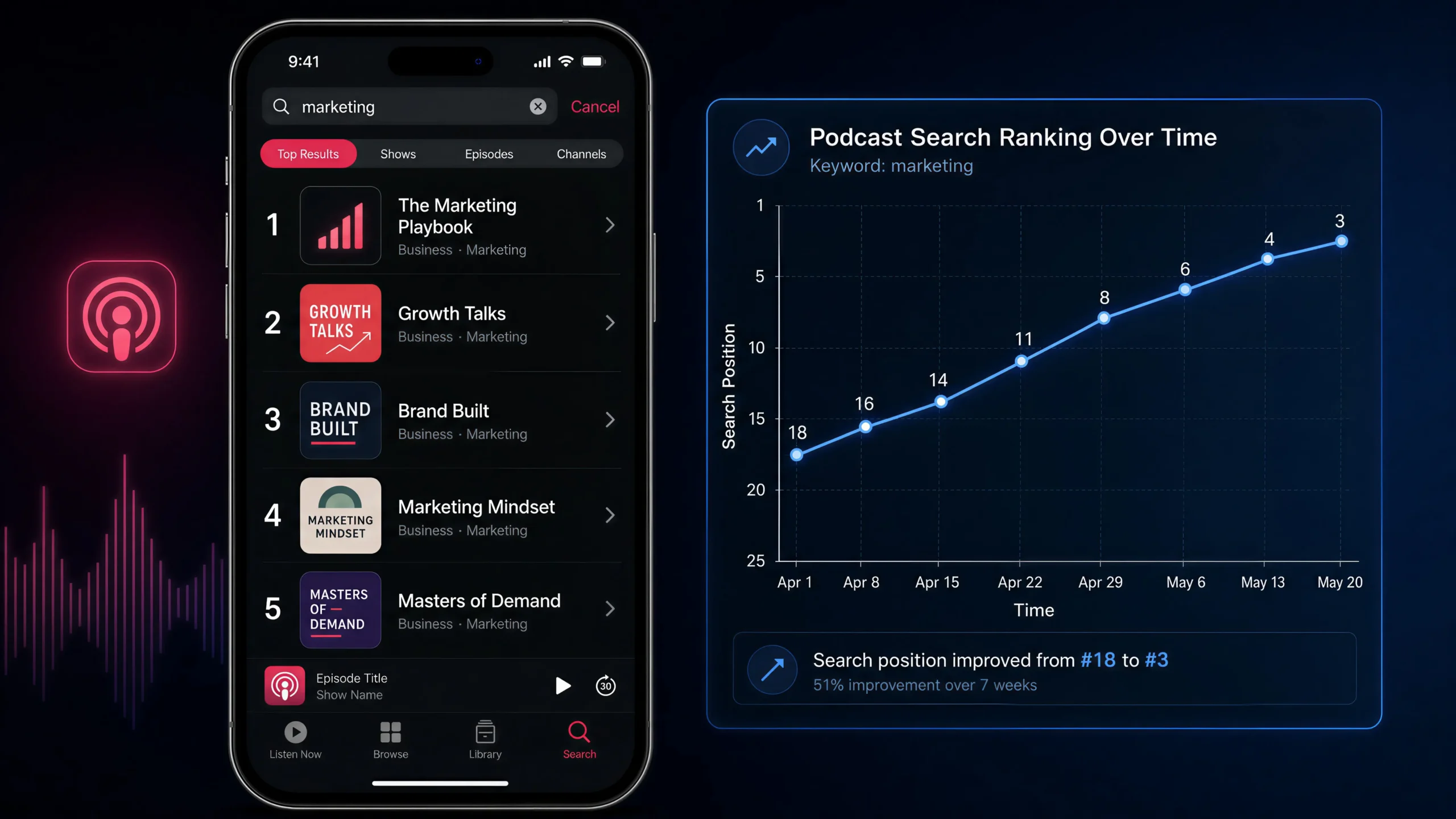
If you have been exploring podcast hosting platforms or growth tools lately, you have probably come across a term that sounds impressively technical: PSO, or Podcast Search Optimization.
It is Ausha’s flagship visibility feature, marketed aggressively as the podcast equivalent of SEO, and it comes with dashboards, scores, competitor tracking, and keyword rankings that look convincingly data-driven.
But before you restructure your entire content strategy around it, it is worth understanding exactly what PSO is, what it actually measures, and where the limits of its usefulness begin.
A quick note on how this analysis was put together: We did not contact Ausha directly or receive any briefing from their team. What follows is our best understanding of how their PSO system works, pieced together using AI to analyze publicly available information.
Ausha’s own product pages, help documentation, published research, and what is technically knowable about how Apple Podcasts and Spotify handle search data. Apple’s ranking and search algorithm is entirely proprietary.
Apple does not share it with developers, hosting platforms, or third-party tools.
So where we describe how things work “under the hood,” we are making informed inferences from public signals, not stating confirmed facts from Apple itself.
What Podcast Search Optimization? Who It Is For
PSO was created and branded by Ausha, a French podcast hosting and marketing platform. The term does not come from Apple, Spotify, or any platform. Ausha coined it.
The concept is straightforward: just as SEO helps websites rank higher in Google search results, PSO is designed to help podcasts rank higher when listeners type keywords into the search bar of Apple Podcasts or Spotify.
The tool is aimed at podcasters who are serious about growing their audience organically, without relying solely on paid promotion, social media, or word of mouth.
It is particularly appealing to shows in competitive niches like business, health, true crime, or personal development, where dozens of podcasts are all chasing the same listener.
The pitch is simple: figure out what your ideal listener is searching for, make sure your show appears at the top of those results, and generate a steady stream of new listeners who are already primed to care about your topic.
What the PSO Control Panel Claims to Do
Ausha’s PSO Control Panel is a suite of tools built around keyword tracking and metadata optimization. At its core, it lets you select keywords you want your podcast to rank for.
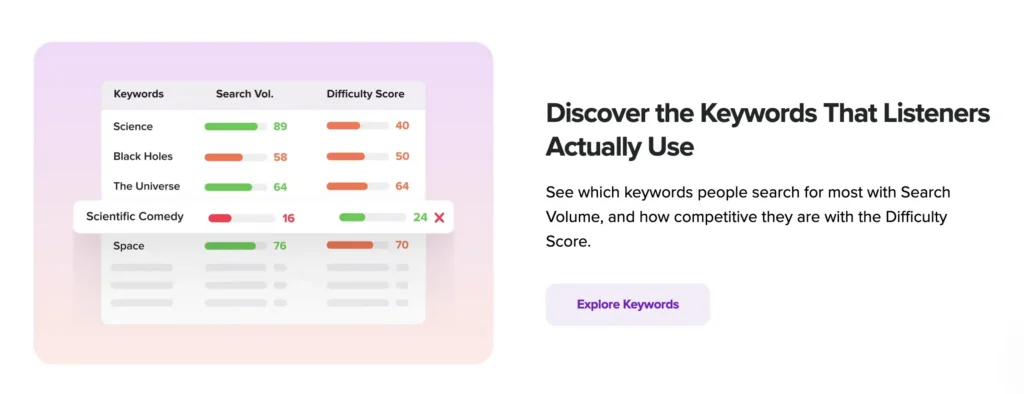
Screenshot from Ausha PSO Webpage
Phrases like “entrepreneurship podcast,” “anxiety tips,” or “true crime weekly”, and then monitors where your show appears in Apple Podcasts and Spotify search results for those terms over time.
Beyond basic rank tracking, the tool offers several additional layers. A Search Volume indicator tells you how popular a keyword is among listeners.
A Difficulty Score estimates how competitive a keyword is based on the strength of shows currently in the top positions. A PSO Checker lets you paste in your episode title, description, and tags and returns an optimisation score out of 100 with step-by-step recommendations.
A Competitors tab shows the top ten podcasts ranking for your tracked keywords so you can study their metadata strategy. A Category Benchmark feature compares your show against category leaders on metrics like title length, description length, cover art style, and publishing frequency.
Ausha has backed the tool with its own research, analyzing over one thousand keywords and more than seven million search results.
Key findings include: 97% of top-ten podcasts use their main keyword in their metadata, adding a keyword to your show title can lift your ranking by an average of five positions, and using a keyword at least five times in your show description can boost your position by an average of nine spots, according to [Ausha’s podcast SEO research study].
On paper, it is a compelling and well-packaged product.
What PSO Actually Is Under the Hood
Here is where it is important to slow down — because PSO is not what it might initially appear to be.
Apple does not provide any search ranking data to third parties. There is no official API, no published algorithm documentation, and no data partnership with Ausha or anyone else.
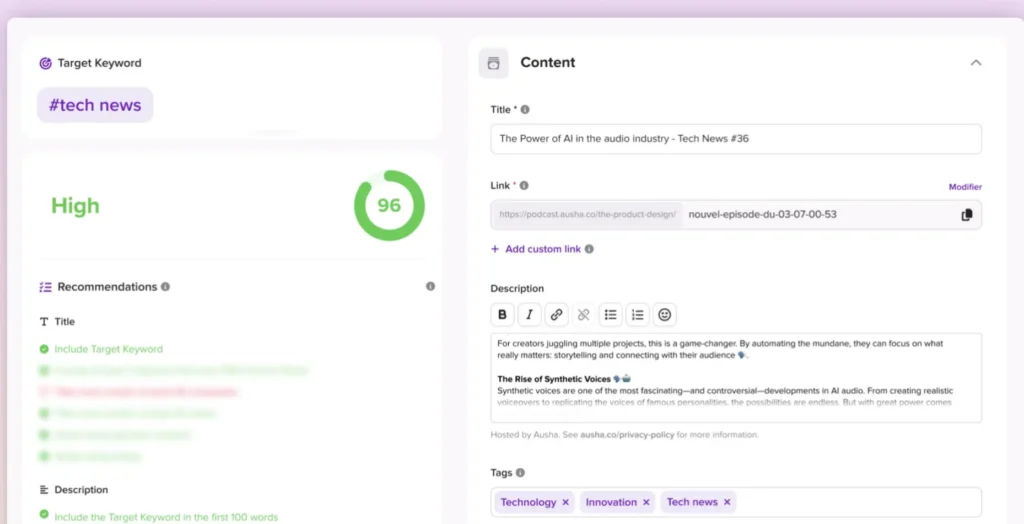
Screenshot from Ausha PSO Dashboard
What Ausha actually does is query Apple’s and Spotify’s public search endpoints, the same search that fires when a listener types a keyword into the app and records which shows appear and in what order.
They do this programmatically, for thousands of keywords, on a regular basis, storing the results over time. That is how they can show you that your show moved from position #18 to #11 for a given keyword over the past two weeks.
The raw position data is real.
If Ausha says you are ranking #11 for “marketing podcast” on Apple Podcasts today, that reflects an actual query of Apple’s search results. That part is grounded in something observable.
But everything built around that data — the optimization scores, the difficulty ratings, the search volume estimates, the recommendations, is Ausha’s own proprietary model.
It is built from patterns they observed across their own user base of hosted podcasts, correlating metadata characteristics with observed search positions. Apple has never confirmed, validated, or contributed to any of it.
The “score of 67/100” your episode receives is Ausha’s assessment of how well your metadata conforms to Ausha’s theory of what Apple’s algorithm rewards. It is not Apple’s assessment of anything.
This matters because you could follow every PSO recommendation, achieve a perfect score in Ausha’s system, and still see no movement in Apple’s actual search results, because Apple’s algorithm also factors in listener behavior signals like completion rates, follow velocity, and engagement patterns that no third-party tool has access to.
The Truth About Ausha PSO Performance
In an ideal situation, the chain of logic does hold together. If Ausha tells you your show is ranking #3 for “marketing podcast,” and that episode sees a spike in downloads shortly after, you can reasonably infer that some of those listeners found you through that search term.
The metadata optimization likely helped get you to position #3, and position #3 generated real discovery. The correlation is real, and the outcome is real. The problem is that this ideal scenario is rarer than Ausha’s marketing implies, for several reasons.
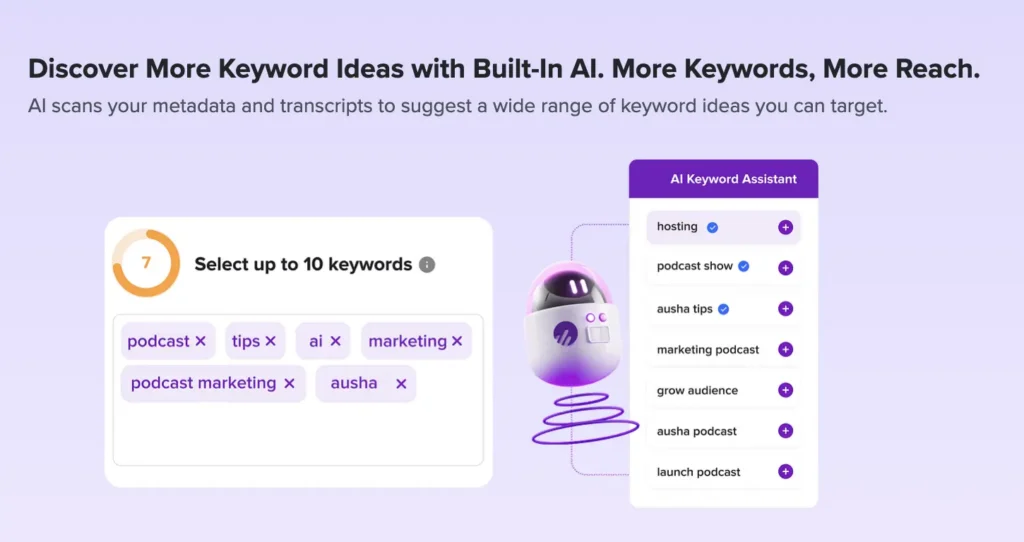
Ausha PSO Keyword Ideas Using AI
Search volume on podcast apps is genuinely low. Even if you rank #1 for a keyword on Apple Podcasts, the total number of people searching that exact term in the app on any given day may be in the hundreds, not thousands.
This is not Google.
Most podcast discovery still happens through word of mouth, social media, cross-promotion, and guest appearances, not in-app search. So even a perfect keyword ranking may produce a modest, hard-to-detect download lift.
Why Podcast Search Rankings Are Hard to Measure
Attribution is nearly impossible.
When downloads go up after you optimize your metadata, you cannot actually confirm the cause.
The increase could come from the keyword ranking. A guest sharing the episode, chart movement, or an algorithmic recommendation could also drive growth.
Simple natural variance in your audience’s behavior may also explain the change.
Ausha does not have access to Apple’s referral data. Without that information, there is no way to close the loop and confirm that search was the driver. You are left inferring from coincidence.
The keywords you rank for may not match real listener intent. Ausha’s search volume estimates are their own approximations, derived from their internal data rather than from Apple or Spotify directly.
A keyword that scores as “high volume” in their system may actually reflect very low real-world search behaviour in Apple Podcasts specifically. You could invest significant effort optimising for a term that almost nobody is actually typing.
Our Ausha PSO Honest Verdict
None of this makes PSO useless. The search position tracking is the genuinely valuable part.
It gives podcasters a feedback loop that did not previously exist. Before tools like this, creators optimized their metadata blindly. They had no clear way to see whether a title change, keyword adjustment, or description update actually made a difference.
Seeing your position move after making changes is a meaningful improvement over guessing.
Podcasters should treat PSO as a weak positive signal rather than a dependable growth lever. It is Ausha’s own framework, built on public data and internal modeling. The SEO-style language makes it feel more authoritative than it actually is.
The channel it optimizes for, in-app keyword search, is also a smaller piece of podcast discovery than the marketing suggests.
Use it as one input among many.
Track a handful of keywords that reflect what your ideal listener would actually search for. Watch whether your position improves after metadata changes. Then look for any corresponding movement in your downloads.
If there is movement, you may have found a real signal.
If there is not, do not be surprised. You are working with a map drawn by a third party. They are looking at the outside of a building, not someone who has ever been inside.
This analysis is based on publicly available information about how Ausha’s PSO tool works. It also considers how Apple Podcasts and Spotify handle search data.
Neither Apple nor Spotify has published official documentation explaining their search ranking algorithms.
🎙️ Free Podcast Tools To Grow Your Show
Building a better podcast takes more than hitting record. Use these free tools from The Podcast Haven to plan smarter, optimize your content, and reach more listeners.
💡 Need a Podcast Name That Stands Out?
Brainstorm memorable show names in seconds with our Podcast Name Generator. Get creative ideas based on your topic, audience, and niche.
🔍 Already Have a Name Idea?
Before you launch, run it through our Podcast Name Checker to see if your podcast name is available and ready to use.
🎧 Not Sure What Gear You Need?
Skip the endless research. Our Podcast Equipment Finder gives you personalized microphone, camera, and setup recommendations based on your goals and budget.
📈 Improve Your Podcast SEO
Want more listeners to find your episodes? Try our FREE Podcast SEO Grader to analyze your titles, descriptions, and discoverability opportunities.
🤖 Get a Free AI Podcast Audit
Find out what’s working and what needs improvement. Our Podcast Growth Report reviews your show and gives you insights around content strategy, growth opportunities, repurposing ideas, and audience development.
📚 Keep Learning
Explore more podcasting tips, tutorials, and growth strategies inside The Podcast Haven Blog Archives.